
History of Koppal
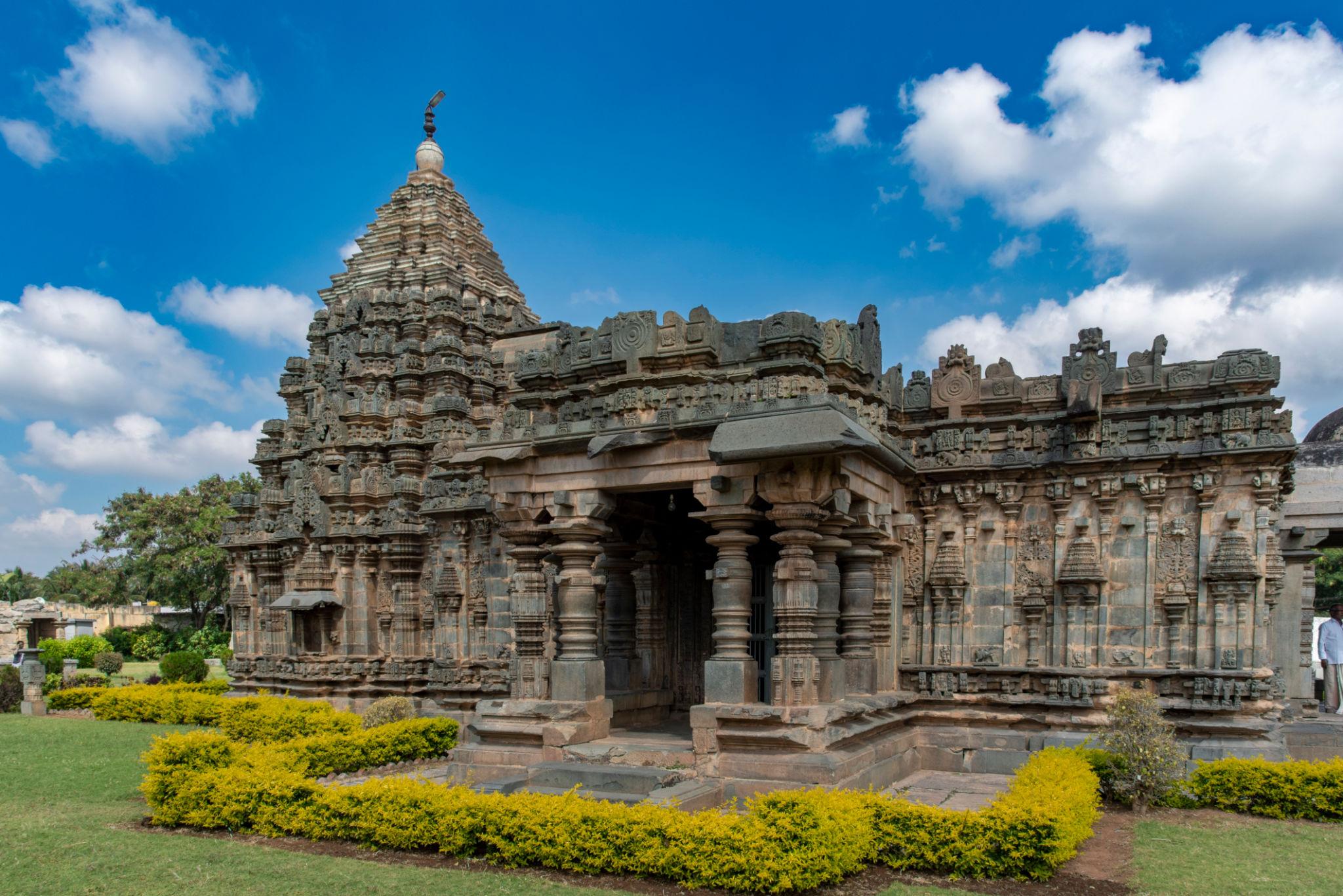
Koppal, located in the northern part of Karnataka, is a region with a rich and ancient history that dates back thousands of years. The district has evidence of prehistoric settlements, including the famous Hirebenakal Megalithic Site, which contains ancient burial monuments and megalithic structures. Over the centuries, Koppal came under the rule and influence of several important South Indian dynasties, including the Chalukyas of Badami and the Western Chalukyas, who contributed greatly to the region’s architecture, culture, and religious traditions. The magnificent Mahadeva Temple at Itagi, built in 1112 CE during the Western Chalukya period, is one of the finest examples of their architectural excellence. Koppal later witnessed the influence of the Hoysalas and became closely associated with the powerful Vijayanagara Empire. Anegundi, situated on the banks of the Tungabhadra River, holds special historical significance as one of the early capitals of the Vijayanagara Empire and is surrounded by temples, monuments, and archaeological remains.Koppal has a particularly strong connection with the Vijayanagara Empire. Anegundi, located in the Gangavathi area, served as the early capital of the Vijayanagara Empire. Its historic fort, palace remains and monuments continue to reflect the grandeur of that period.
District Overview
Koppal District is a historically significant and culturally vibrant district located in the northern part of Karnataka. Established as a separate district in 1998, Koppal is renowned for its rich archaeological heritage, ancient temples, historic monuments, scenic landscapes, and traditional culture. The district has played an important role in the history of Karnataka and has been associated with several prominent dynasties, including the Chalukyas, Hoysalas, Rashtrakutas, and the Vijayanagara Empire.The district is home to numerous historical and religious landmarks that showcase its remarkable architectural legacy. The Mahadeva Temple at Itagi, built in 1112 CE during the Kalyana Chalukya period, is celebrated for its intricate stone craftsmanship and architectural excellence. Anegundi, one of the oldest settlements in the region, has a close connection with the Vijayanagara Empire and forms an important part of the heritage landscape surrounding Hampi. Koppal Fort, Kanakagiri, Kuknoor, and the ancient Hirebenakal Megalithic Site further highlight the district’s long and diverse history.Koppal is also a significant centre of spirituality and pilgrimage. Anjanadri Hill, traditionally associated with Lord Hanuman and the Kishkindha region described in the Ramayana tradition, attracts devotees and visitors throughout the year. Summer usually extends from March to May and is characterized by hot and dry weather. Temperatures can rise considerably during the peak summer months, particularly during April and May.The Southwest Monsoon brings most of the district’s annual rainfall, mainly between June and September. Rainfall patterns can vary across different parts of the district, and agriculture is influenced significantly by the availability and distribution of monsoon rainfall.
Geography & Climate
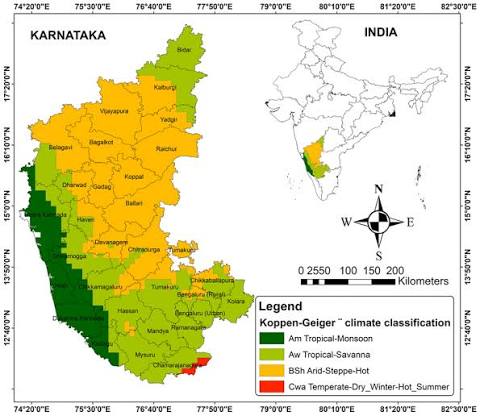
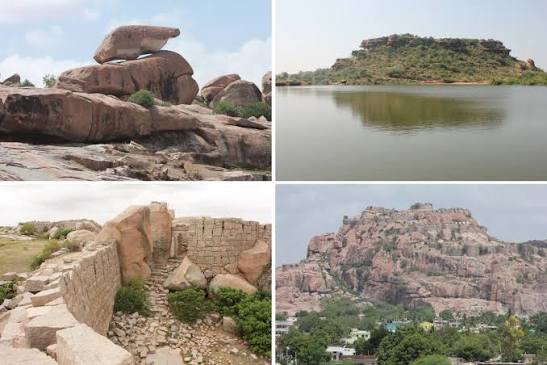
Koppal District is located in the northern part of Karnataka and forms part of the Deccan Plateau, characterized by rocky hills, undulating plains, agricultural lands, valleys, and distinctive granite formations. The Tungabhadra River is one of the district’s major geographical features, supporting agriculture, settlements, and local ecosystems while adding to the scenic beauty of areas around Anegundi and surrounding regions. Koppal experiences a tropical semi-arid climate, with three main seasons—summer, monsoon, and winter. Summers are generally hot and dry, particularly during April and May, while the Southwest Monsoon brings most of the annual rainfall between June and September. Winters, from November to February, are comparatively cooler and pleasant. The combination of its rocky landscapes, river systems, agricultural plains, hills, and semi-arid climate gives Koppal a distinctive natural character.The winter season, generally from November to February, brings relatively cooler and more pleasant weather, especially during the mornings and evenings. These geographical and climatic conditions have contributed to Koppal’s distinctive environment, supporting agriculture while shaping its historic settlements, cultural traditions, natural landscapes, and tourism attractions. The combination of rocky terrain, river systems, agricultural plains, ancient geological formations, and a semi-arid climate gives Koppal a unique identity within Karnataka.
Major Towns
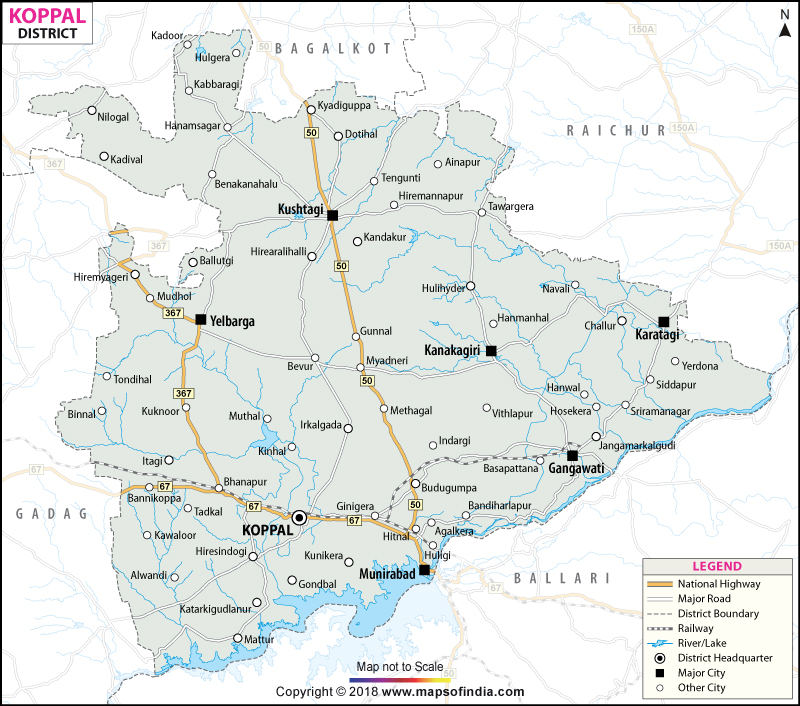
Explore the major towns and important centres of Koppal
Administrative Divisions
Koppal
Koppal is the district headquarters and an important administrative, commercial, educational and cultural centre of the district. It is also known for its historic monuments and Koppal Fort.
Gangavathi
Gangavathi is an important agricultural and commercial centre of Koppal District and is particularly known for rice cultivation.
Kushtagi
Kushtagi is an important regional centre supporting agriculture, trade, education and public services.
Yelburga
Yelburga is an important agricultural and cultural centre surrounded by villages and areas of historical significance.
Kanakagiri
Kanakagiri is a historic and religious centre known for its temples and rich cultural heritage.
Kuknoor
Kuknoor is known for its ancient temples and architectural heritage.
Karatagi
Karatagi is an important town and administrative centre supporting surrounding agricultural communities.
Revenue & Financial Overview
Koppal District’s economy is primarily supported by agriculture, allied activities, trade, small-scale industries, and local commerce. Agriculture remains an important source of livelihood, supported by the Tungabhadra River and irrigation infrastructure in several parts of the district. The region is particularly known for the cultivation of paddy, maize, pulses, cotton, sunflower, and other crops, while livestock and related activities contribute to rural household incomes. Towns such as Koppal, Gangavathi, Kushtagi, Yelburga, Kanakagiri, Kuknoor, and Karatagi serve as important centres for agricultural trade, markets, banking, transport, and other financial services. Revenue administration in the district involves land records, land revenue, registration-related activities, taxation, and the management of government resources, with administrative institutions working to support efficient public service delivery. The district also has opportunities for economic growth through agro-based industries, tourism, heritage conservation, small and medium enterprises, infrastructure development, and local entrepreneurship. Together, agriculture, commerce, public revenue, financial services, and emerging economic activities form an important foundation for the continued development of Koppal District.
Population Overview
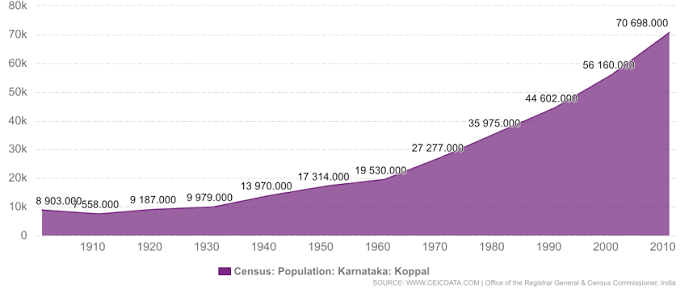
Koppal District has a diverse and predominantly rural population, with communities spread across its seven taluks—Koppal, Gangavathi, Kushtagi, Yelburga, Kanakagiri, Kuknoor, and Karatagi. According to the current district profile, Koppal has a population of approximately 13.9 lakh people. Agriculture and allied activities remain important sources of livelihood for a significant portion of the population, while urban centres such as Koppal and Gangavathi serve as important hubs for education, trade, healthcare, employment, and public services. The district’s population reflects a rich mix of cultural traditions, languages, occupations, and communities, contributing to its distinctive social and cultural identity. Population distribution varies between urban and rural areas, with villages forming a major part of the district’s settlement pattern. Continued development in education, healthcare, infrastructure, employment opportunities, and digital public services plays an important role in improving the quality of life and supporting sustainable population growth across Koppal District.
Koppal District Statistics
Area
5,570 Sq Km
Population
13,89,920
Male Population
6,99,926
Female Population
6,89,994
Literacy Rate
68.09%
Revenue Divisions
1
Talukas
7
Major River
Tungabhadra
Headquarters
Koppal
Population Density
250 / km²